
Planting of New Delhi

In November of 2025, I was able to make a brief trip to New Delhi, India, the city where my wife was born. This was my third trip to the city, though it was my first in twenty years. During this trip I was amazed to see the amount of trees and streetscape planting and was curious to learn more about the efforts to expand the city’s urban canopy.
Like most cities of its size, Delhi is not a singular entity but more of a collection of cities, including the original dense walled city, the radial plan of Lutyens’ Imperial Delhi, as well as hundreds of smaller villages that have been absorbed into the growing metropolis over time.
Delhi’s climate is similar to the climate of Los Angeles, though Mexico City is probably a better overall comparison in terms of size, geography and character. Delhi receives about double the annual rainfall as Los Angeles, and receives the majority of the rain during the warm monsoon season July to September instead of the winter months as it does here in Los Angeles.
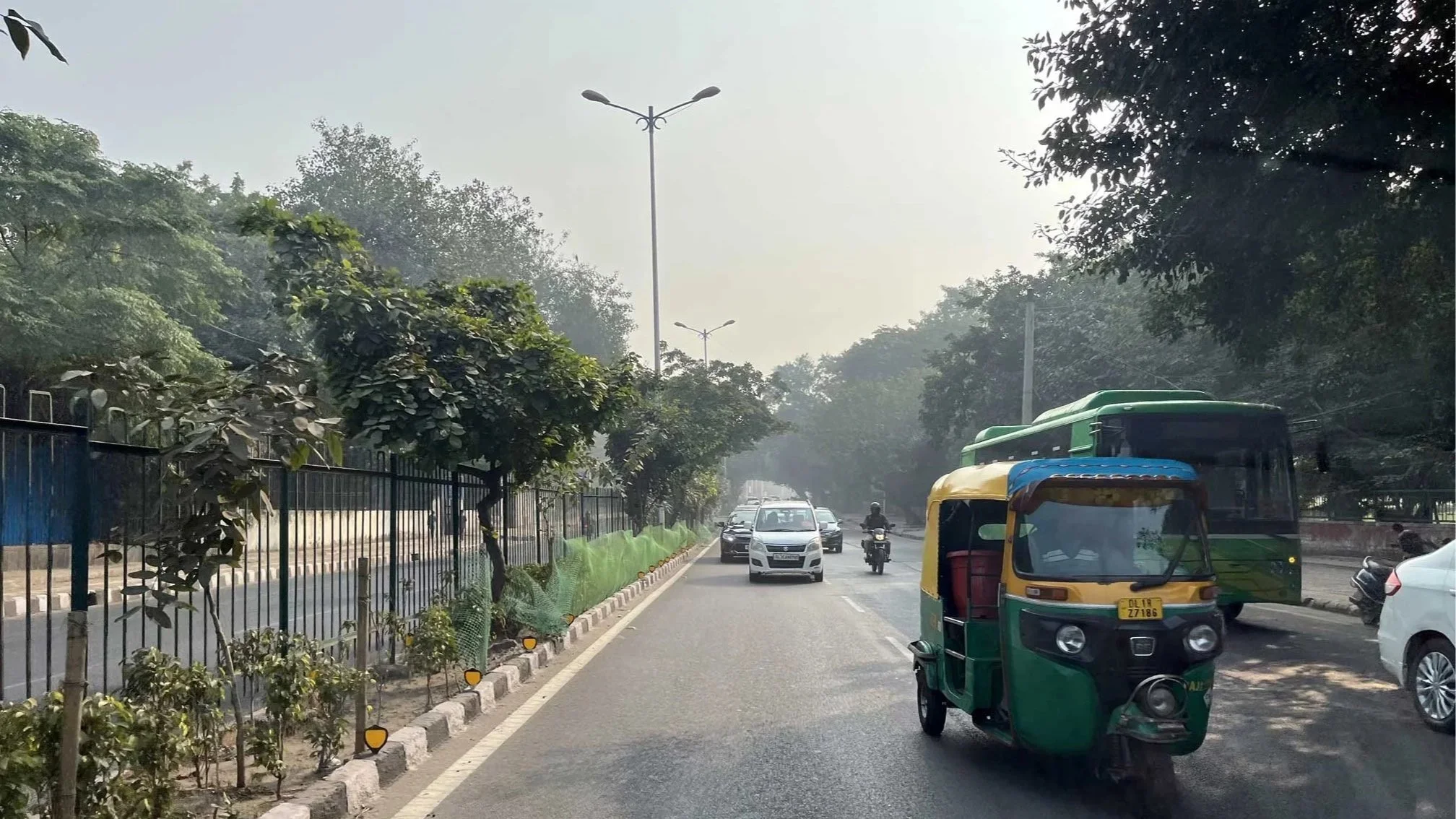
With approximately 30 million inhabitants, Delhi is among the top five most populous cities in the world, and unfortunately it is listed as the city with the world's worst air quality. In the United States we are most familiar with the metric AQI (Air Quality Index) which measures air quality on a 500 point scale, in which 0-50 is Good, 51-100 is Moderate, 101-150 is Unhealthy for sensitive groups, 151-200 is Unhealthy, 201-300 is Very unhealthy, and >300 is Hazardous. For local context, in the week after the Eaton Fire, the AQI of Altadena and Pasadena was around 180. The current (December 3rd 2025) AQI in Delhi is 323, hazardous.
The causes of air quality issues are a combination of industrial, vehicular and agricultural emissions that are exacerbated by the city’s bowl-like geography. The quality of the air varies seasonally, with the best air after the rains in July and September, typically in the moderate range 51-100, and worst in the winter November to February during the seasonal inversion in which cold, polluted, air is trapped at the ground level by a layer of warmer air, keeping the air from mixing and dispersing vertically.
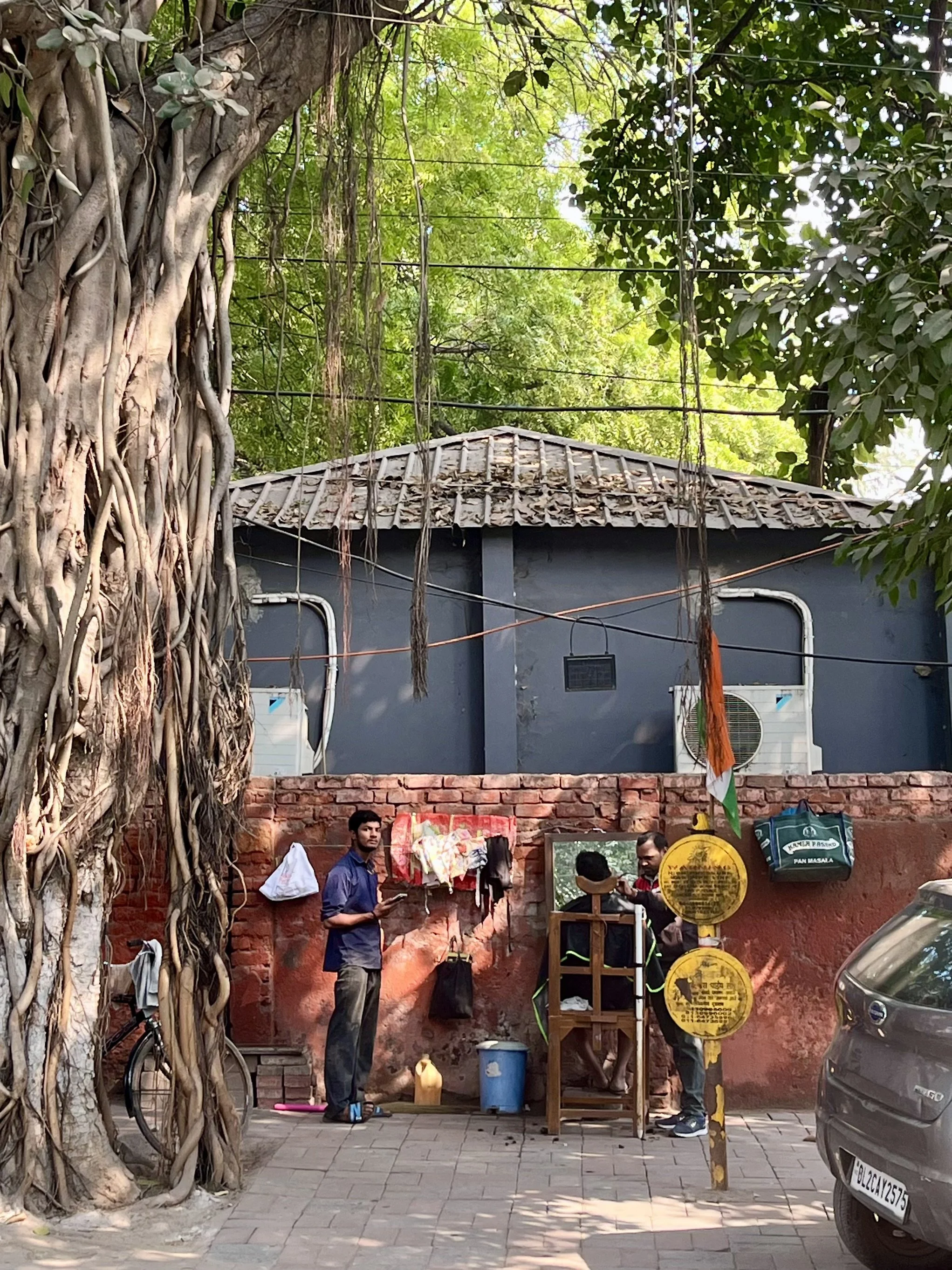
In the last two decades, citizens, NGO’s, and local and national governments have taken a variety of steps to improve the quality of air in the city, including implementing more strict industrial emission standards, encouraging electric vehicles and mass transit, providing alternatives for biomass burning for heat and cooking, and establishing ambitious program of tree planting. And while the air quality remains a persistent, dire health issue for the inhabitants of the city, the air quality has improved slightly over the last few years. This year, the average AQI for November in Delhi was 291; last year 2024 the average was 381, and in 2023 the average was 415.
There is much work to be done, but progress has been made.
Though the exact numbers are hard to pin down, in the last twenty five years, approximately 100 million trees have been planted in Delhi. In that time, the urban tree canopy coverage has more than doubled from 10% in 2000, to about 23% today. And while trees alone will not solve the air quality problem, they do provide a significant impact lowering ground temperatures, absorbing gasses, and filtering out fine particulates.
Tree species planted have largely been native trees such as, PEEPAL Ficus religiousa, NEEM Azadirachta indica, SHEESHAM Dalbergia sisso, SIRIS Albizia Lebbek; and also exotic nitrogen-fixing fabacea species like, GULMOHAR Delonix Regia, GULABI SIRIS Samanea saman, and LMLI Tamarindus indica, which despite its name is native to east Africa.
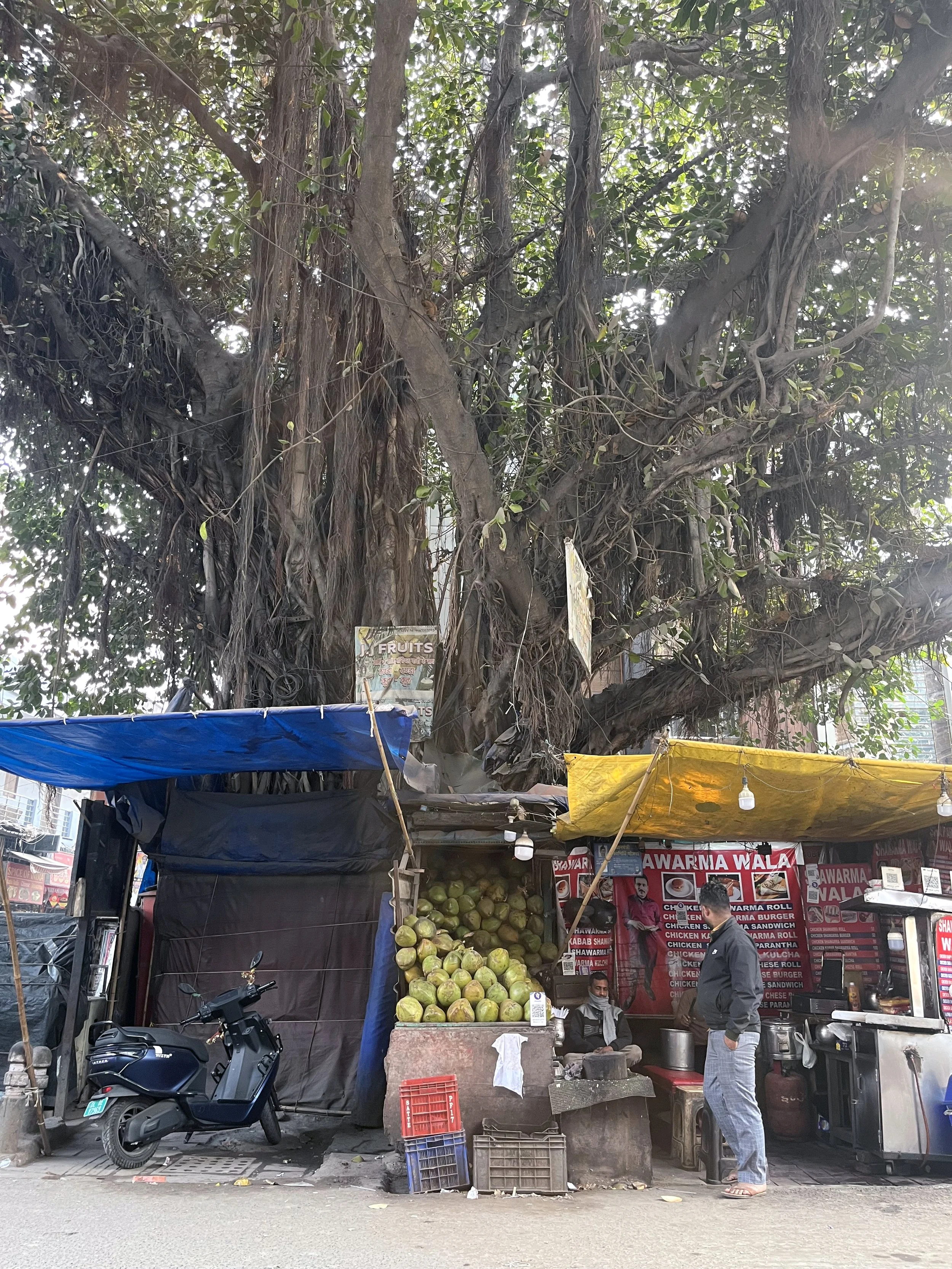
These species are able to grow and thrive in Delhi’s climate and challenging urban environment characterized by limited root space, erratic rainfall and irrigation, higher temperatures and high concentrations of ozone, sulfur dioxide, and nitrogen oxides.
Though urban soils are typically compacted and non-aerated, as construction in India is labor dependent rather than machinery dependent as it is in the US, so I would suspect that the construction adjacent soils are relatively less compacted. Additionally the tree species most commonly grown in Delhi are shallow, lateral-rooted trees. The upper level of soil profile, where the majority of these roots are located, is less susceptible to compaction and is easier to amend. Where feasible trees and ground cover are planted in large groups, so that plants are able to share rooting space and be irrigated by hand in a linear furrow or larger basin.
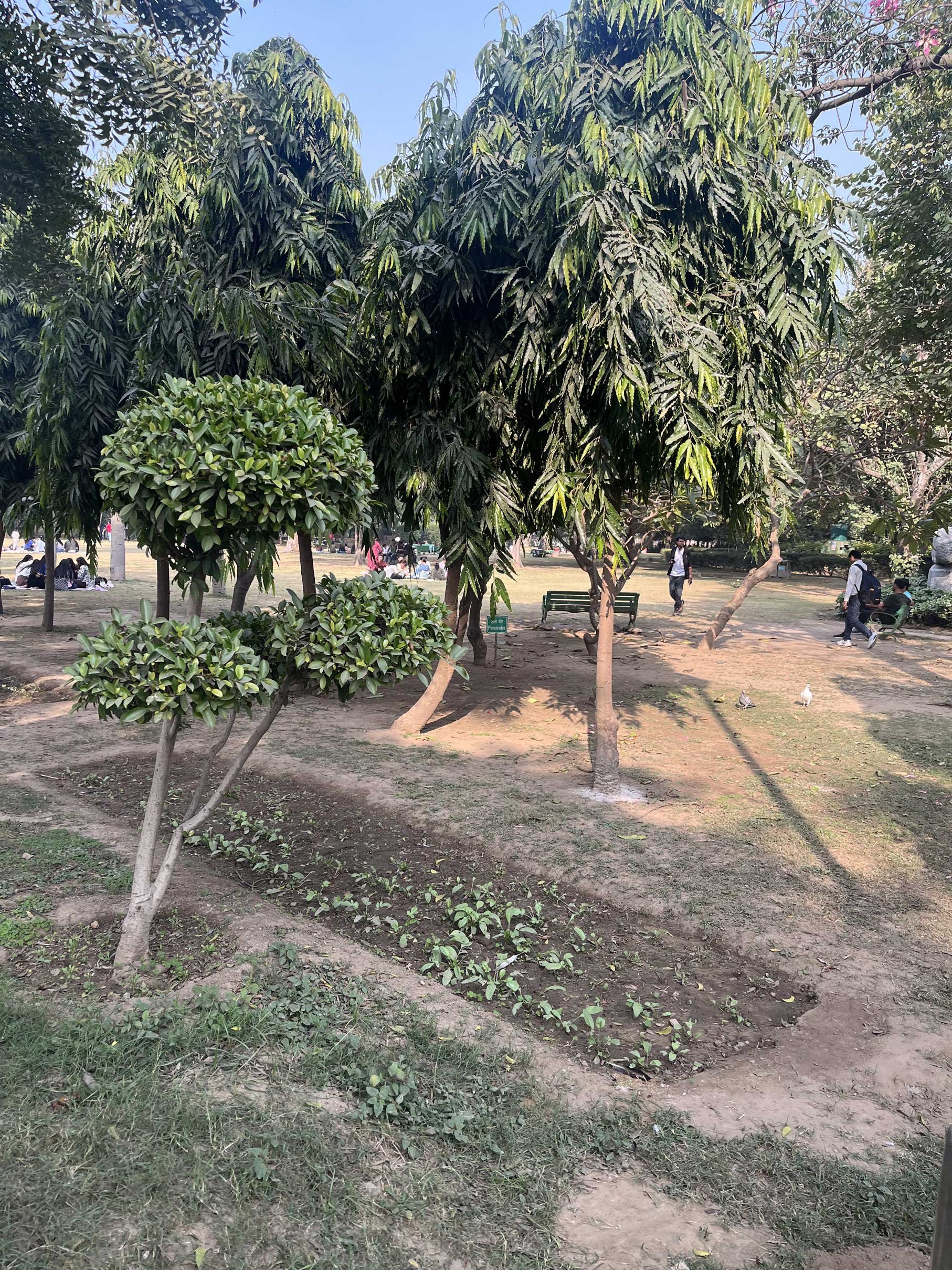
These broad and continuous planting areas can also help moderate the impact of shallow lateral roots on adjacent pavements. However, in Delhi, the streetscape pavements are largely built with unit pavers, rather than cast in place concrete; these unit pavers shift, buckle tremendously but tend to move as a unit to accommodate shallow tree roots, but do not create the breaks and lifts as with cast in place concrete.
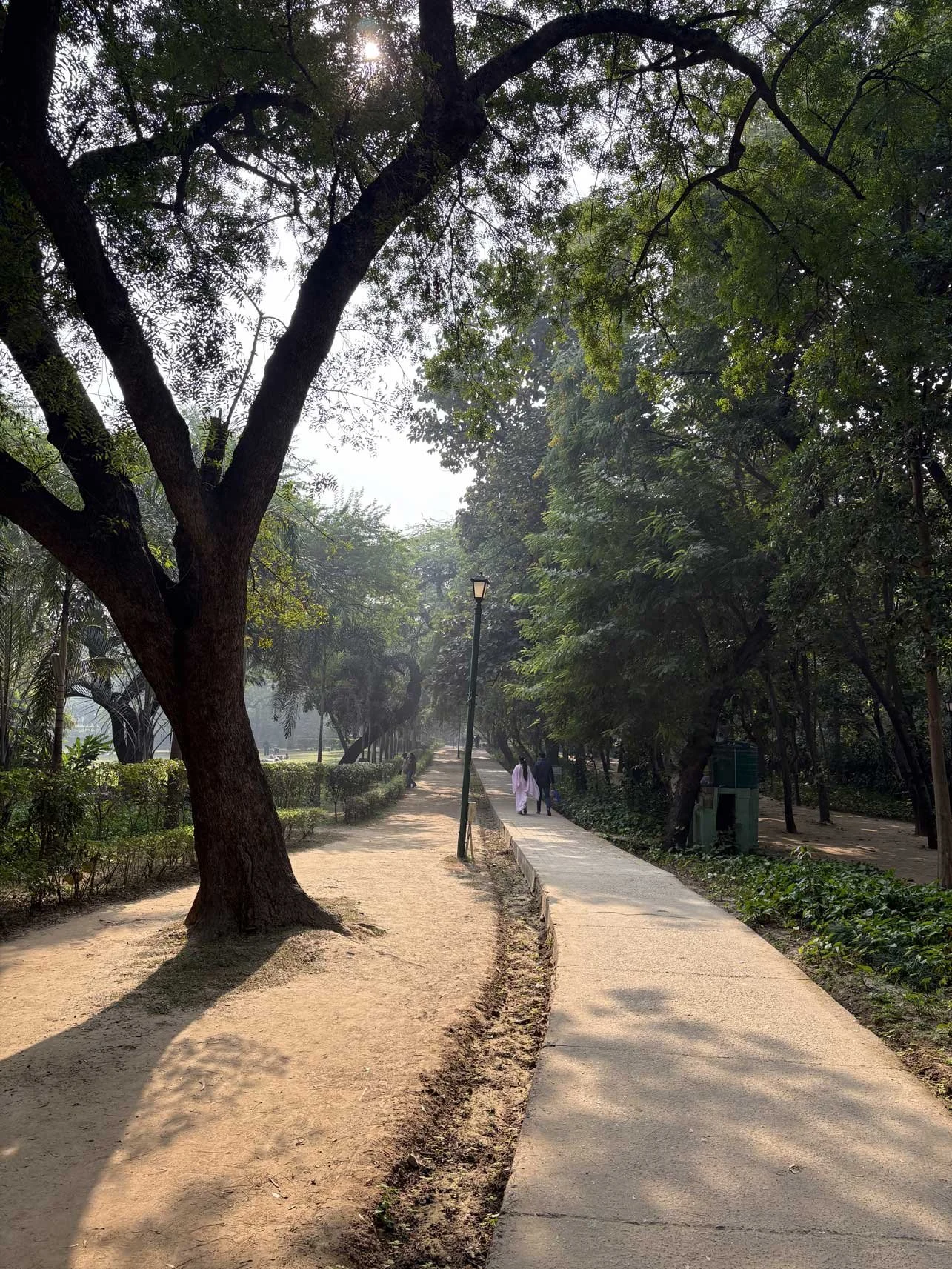
While trees are only a small part of the air quality solution, the ambitious tree planting program in Delhi has been quite successful. Despite high tree mortality rates of above 25%, the scale of quantity of planting has transformed the look and character of the city. Much more must be done to ensure safe air, but the trees are a source and a sign that things can improve.
